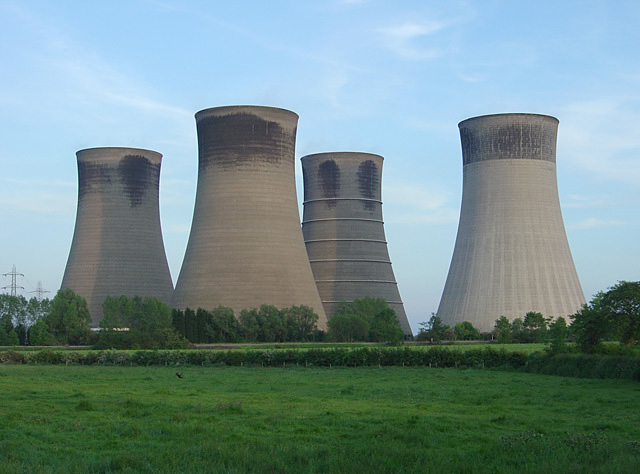
From the production of AI microchips, through to resource-heavy data centres, AI is a sink for electricity, water usage and emissions. As it continues to grow, these resource demands will only grow, jeopardising our planet, and the people living on it.
AI Microchips
Electricity and Emissions
According to Greenpeace East Asia, the manufacture of artificial intelligence (AI) chips increased by 357 percent worldwide between 2023 and 2024. This manufacturing is concentrated particularly in Taiwan, South Korea and Japan.
This increased electricity demand is even worse because electricity in these countries are heavily dependent on fossil fuels. In 2023, 58.5 percent of the electricity supply in South Korea was generated from fossil fuels, 68.6 percent in Japan, and 83.1 percent in Taiwan.
As AI continues to proliferate across society, demand for AI chips will continue to skyrocket, which will result in further electricity consumption from dirty fossil fuels, which will continue to destroy our planet.
Water
Producing a single microchip requires 2.1 – 2.6 gallons (8-10 liters) of water to cool machinery and make sure wafer sheets are free of contaminants.
Data Centres – Training Large Language Models (LLMs)
Electricity and emissions
A 2019 study showed that the carbon footprint of training a single early large language model (LLM) such as GPT-2 at about 300,000kg of CO2 emissions – the equivalent of 125 round-trip flights between New York and Beijing.
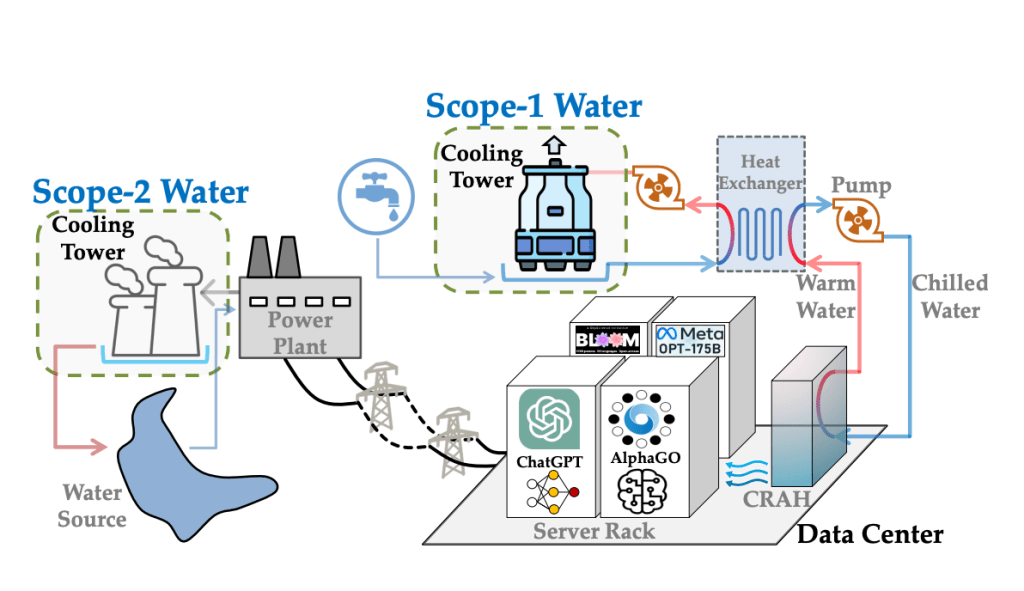
The electricity needed to power data centers often comes from thermoelectric or hydroelectric plants, which require significant amounts of water. In the US, the national weighted average for thermoelectric and hydroelectric water use is7.6 liters of evaporated water per kWh of electricity consumed.
Water
As well as the incredibly intensive electricity demands of data centres, a significant amount of water is also needed in order to cool the hardware used for training, deploying, and fine-tuning generative AI models. This can strain local water supplies and disrupt local ecosystems.
The global AI demand is projected to reach up to 6.6 billion cubic meters of water withdrawal in 2027 – that is 75% as much as the whole of the UK.
BBC News -(10th July 2025) ‘I can’t drink the water’ – life next to a US data centre
 Unplug AI